What asbestos cement roofs look like
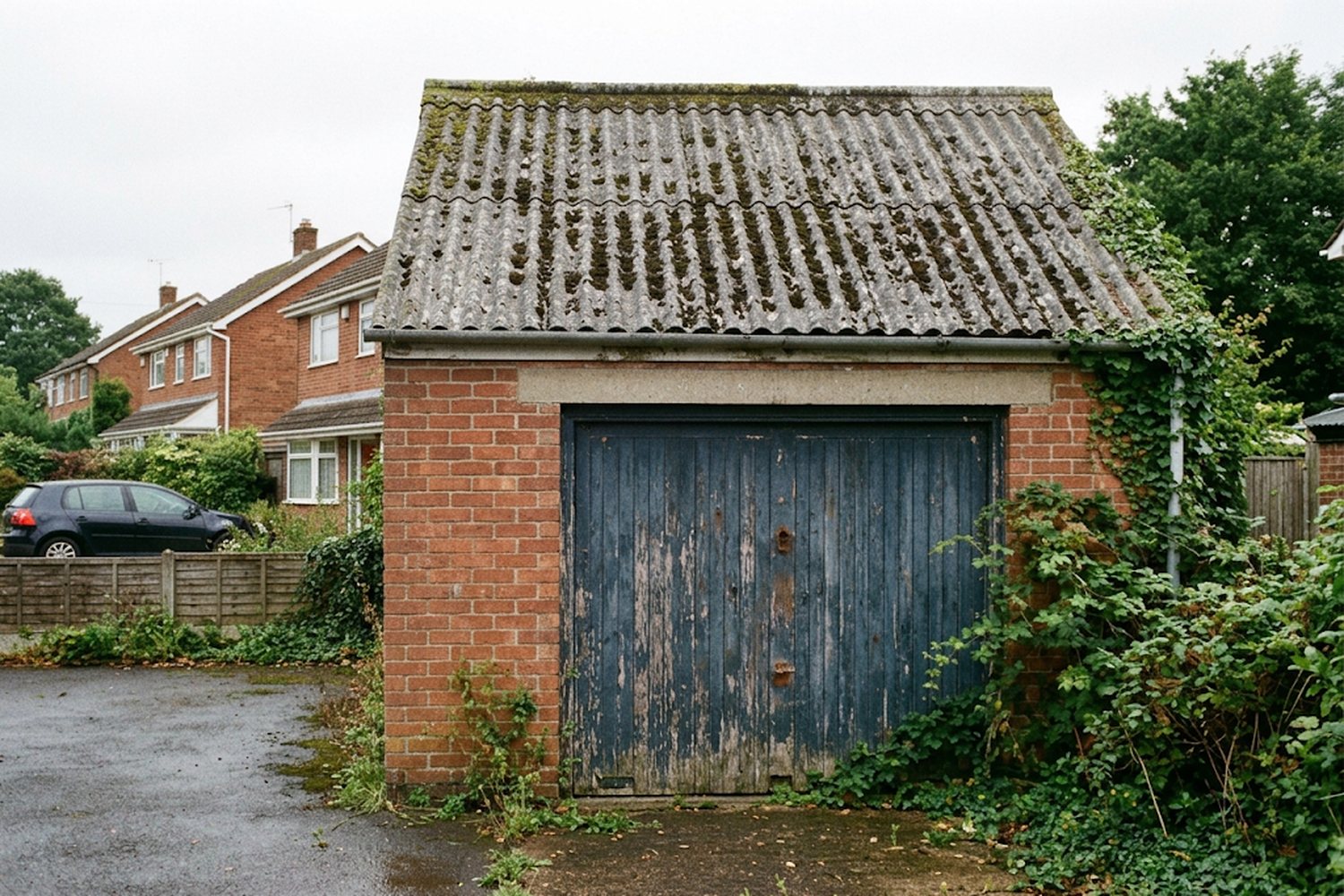
Most asbestos cement garage roofs are large, grey corrugated sheets, usually about a metre wide, with a wave profile you can see from the side. Over decades they turn dull and mossy, and edges can look crumbly or flaky. Fixings are often bolts or hooks that go through the high point of the wave, with small cap covers.
Clues that point to age
- The garage was built before about 2000. Asbestos cement was widely used until the last types were banned in 1999.
- The sheets are thick, heavy and rigid, not thin, flexible plastic or metal.
- There is a ridge piece made of a similar grey cement material.
- Matching grey gutters or downpipes on the same building.
Clues that suggest it is something else
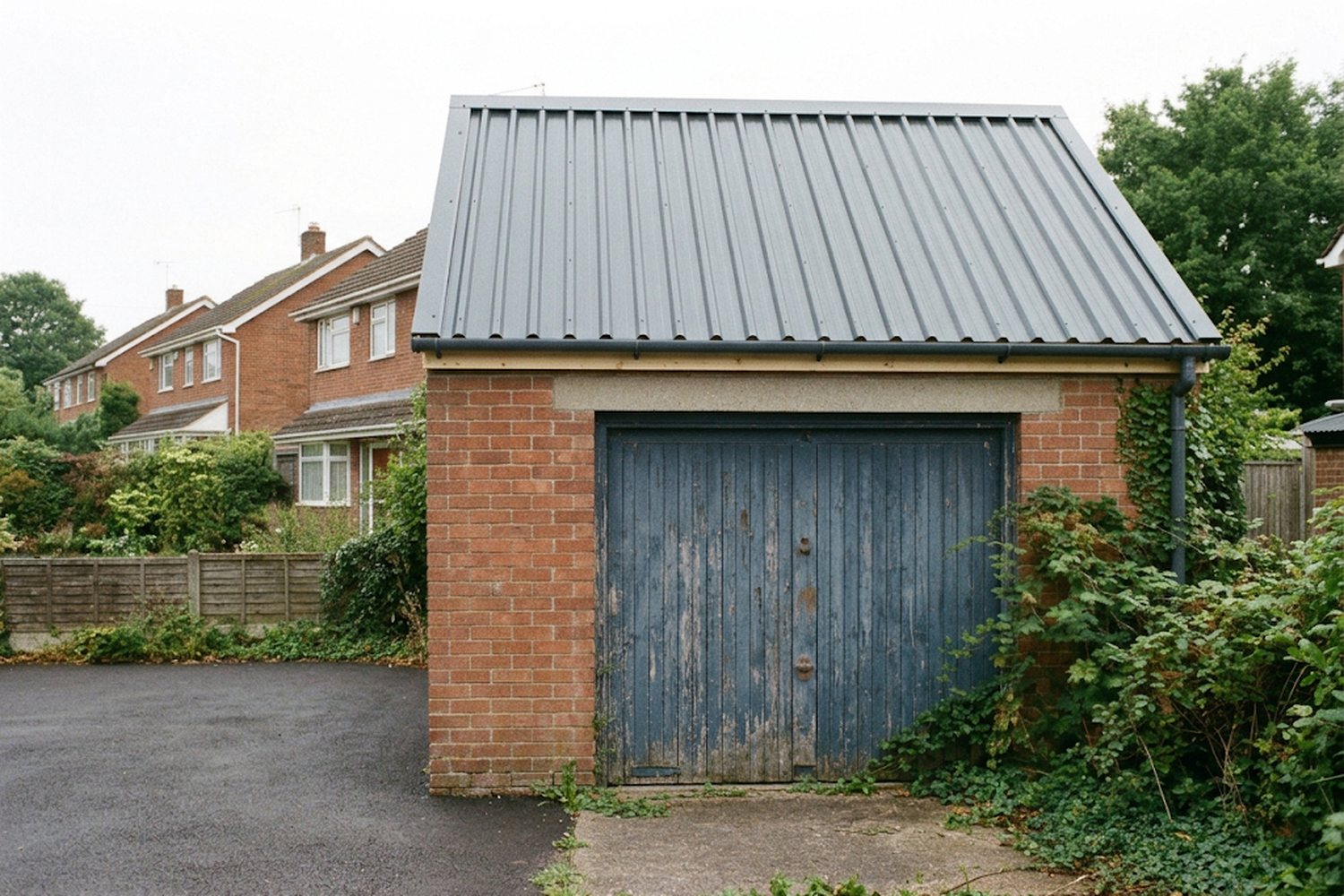
Modern metal sheets ring when tapped and have visible paint colour or a shiny coating. Fibre cement without asbestos looks very similar to the old type, but is usually newer and often has a label or marking from the manufacturer. Plastic sheets are translucent or have a different texture.
What not to do
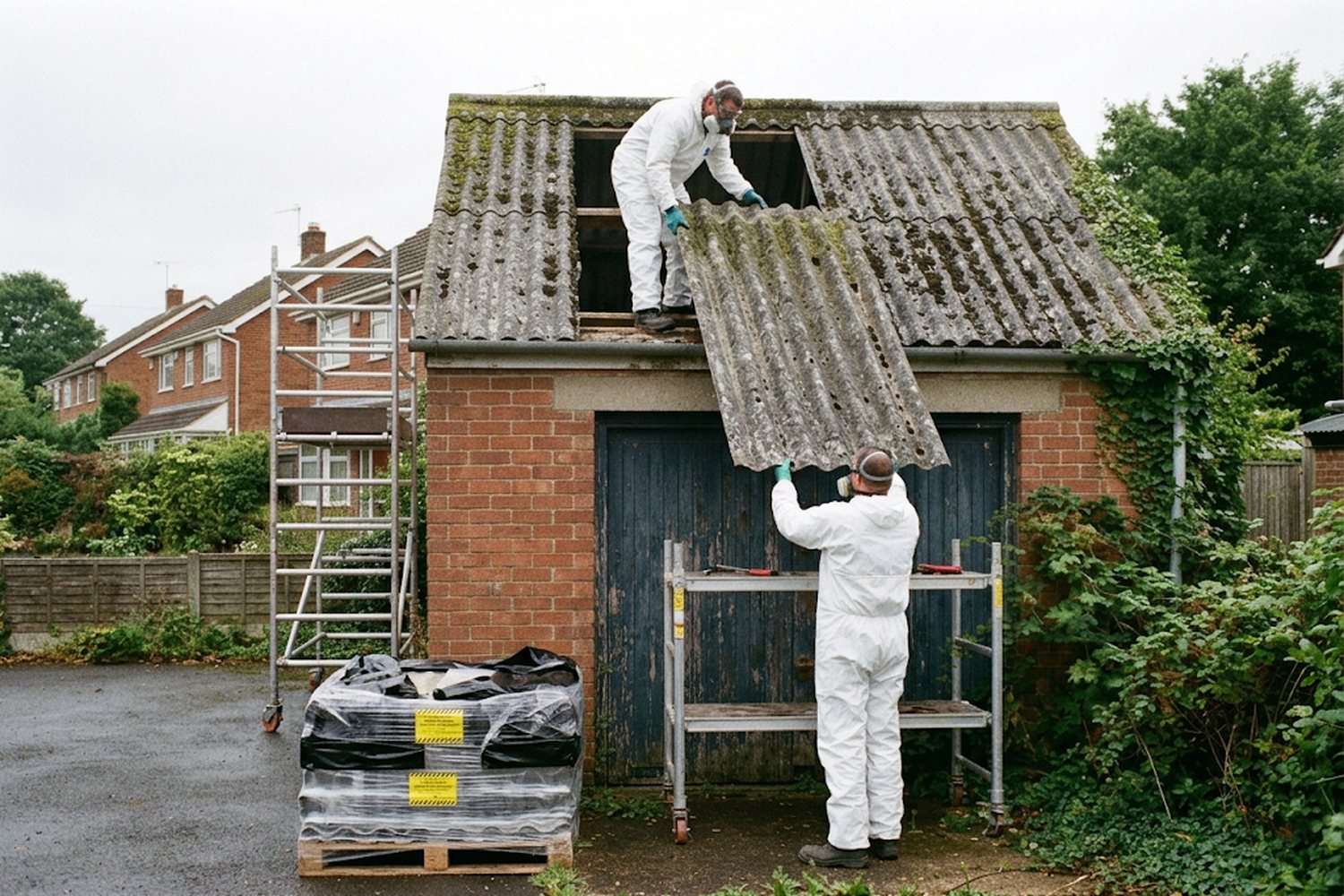
- Do not climb on the roof. Old sheets can break underfoot.
- Do not drill, sand, scrub or pressure-wash it.
- Do not break off a piece to test. Sampling needs to be done with controls to limit dust.
How to get a firm answer
Photograph the roof from the ground and from an upstairs window, noting the age of the garage. Send those photos with a rough size. A contractor can say whether it looks like asbestos cement and whether a laboratory test makes sense before you spend more.
This guide is general information. It is not a survey and cannot confirm the presence or absence of asbestos.